Anchor selection: three traps in concrete strength, edge distance and embedment
A wedge anchor is not universal. The same M12 can differ 40% in pull-out between C20 and C40, and short edge distance will blow out the concrete. This is a selection sequence, not a data sheet.
The most common rework on overseas projects is not a bad anchor — it is selecting on "how many kN does an M12 hold" without checking substrate and edge distance. Anchors fail in five modes, each controlled by a different variable.
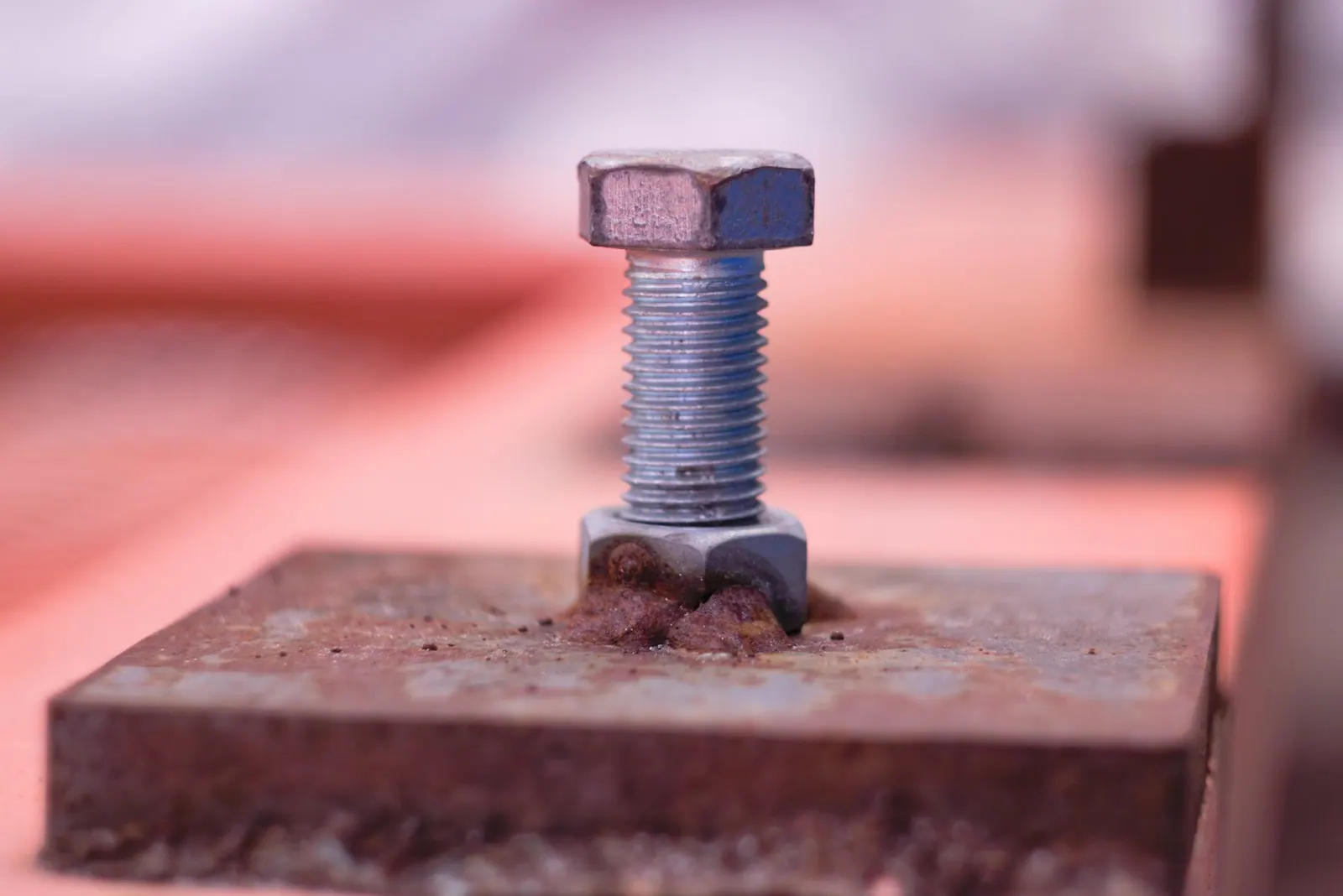
1. Concrete strength: pull-out is not a constant
| Substrate | C20/25 | C30/37 | C40/50 | C50/60 |
|---|---|---|---|---|
| M10 wedge, heff 60mm | ≈ 12 kN | ≈ 16 kN | ≈ 19 kN | ≈ 21 kN |
| M12 wedge, heff 70mm | ≈ 18 kN | ≈ 24 kN | ≈ 28 kN | ≈ 31 kN |
| M16 wedge, heff 90mm | ≈ 32 kN | ≈ 42 kN | ≈ 50 kN | ≈ 55 kN |
Many drawings say "M12 chemical anchor" with no substrate strength. The concrete arrives at C20 and the safety factor calculated for C40 no longer holds. Specify the grade at drawing stage, or design to the lowest plausible strength.
2. Edge distance and spacing: blow-out beats pull-out
The concrete failure cone spreads at roughly 35°. Below 1.5 times effective embedment the cone is truncated by the edge, capacity drops off a cliff, and failure is brittle — no warning.
- Minimum edge distance: ≥1.5 × effective embedment (≥2.0 for seismic)
- Minimum spacing: ≥2.0 × effective embedment
- If edge distance cannot be met: increase embedment, switch to chemical anchors, or use a steel plate to spread load
- Never enlarge the hole on site to make it fit
3. Embedment and hole quality: the ignored 30%
A wedge anchor bites the hole wall through its expansion clip. A hole 0.5 mm oversize or left with dust costs real capacity. Consultants in the GCC and Australia routinely spot-check four things — diameter, depth, cleaning, torque — and any one can fail the lot.
- Drill with the specified bit; do not use a worn bit
- Clean in three steps — blow, brush, blow; chemical anchors also need oil-free air
- Torque to the manufacturer value with a torque wrench; never use an impact driver
- Record: keep pull-out test records per lot at the rate the project specifies
4. Selection sequence that does not go wrong
- Substrate: strength, cracked or uncracked, reinforcement present (scan for it)
- Load: tension, shear or combined; static or dynamic; seismic requirement
- Boundaries: edge distance, spacing, member thickness (through-bolts need the back face checked)
- Type: mechanical or chemical in cracked zones; wedge anchors are the value choice in uncracked concrete
- Verify with the manufacturer ETA software or tables — do not hand-calculate
- Accept: site pull-out tests plus torque spot checks
Want these figures checked against your job?
Send substrate, corrosivity category, annual volume and destination port — we reply with a quote including the standard and finish recommendation.
Related reading
- SolarPV mounting fasteners: installation rules and three common failuresUnder-torqued clamps, reversed U-bolts and galvanic corrosion between aluminium rail and zinc-pl…
- FinishingHDG vs Dacromet: the cost maths behind salt spray dataWhy do Australian projects specify HDG while European solar prefers Dacromet? Lay out the 500h, …